Category

Coverage: Der Spiegel

"Der Spiegel features the Earth Security Index 2014 launch"
Written by
Full Name
Published on
February 3, 2014

Der Spiegel covered the launch of the Earth Security Index Report 2014 at the Munich Security Conference with a panel that included Minister Fu Ying, Chairwoman, Foreign Affairs Committee, 12th National People’s Congress of China; Javier Solana, former chief of NATO and the EU’s External Action Service; Harald Krueger, member of the Board of Management of BMW Group responsible for global production; among others, organized in collaboration with the BMW Foundation. This article has been reproduced with the permission of Der Spiegel.

Studie warnt vor Wasserkrise in China und Indien

Von Markus Becker, 02.02.2014

Die Zerstörung der Umwelt und die Ausbeutung natürlicher Ressourcen bereiten Politikern und Militärs zunehmend Sorge. Eine Studie, die bei der Münchner Sicherheitskonferenz präsentiert wurde, warnt jetzt vor potentiellen Konflikten durch Wasserengpässe in China und Indien.

Wer sich davon überzeugen will, dass Umweltschutz längst nicht mehr nur Ökopaxe in Norwegerpullis interessiert, sollte die Münchner Sicherheitskonferenz besuchen. Im Norwegerpulli käme man hier vermutlich nicht einmal durch die erste Polizei-Absperrung, geschweige denn in das mit Staatssekretären, Ministern, Generälen und Top-Managern gefüllte Hotel Bayerischer Hof. Doch den Anzug- und Uniformträgern bereitet der Umgang der Menschheit mit Natur und Ressourcen inzwischen ähnlich große Sorgen wie Freunden des Grobstricks.

Wie berechtigt die Sorgen sind, wurde schon vor der offiziellen Eröffnung der Konferenz klar. Bei einer Diskussion mit dem markigen Titel "Begrenzte Ressourcen - unbegrenzte Sicherheitsrisiken" saßen Ex-Nato-Generalsekretär Javier Solana und Chinas amtierende Vize-Außenministerin Fu Ying nebeneinander und schauten zeitweise ziemlich besorgt drein. 

Ein Grund: Bei der Diskussion wurde der neue Earth Security Indexvorgestellt. Der Report versucht, die Situation diverser Länder in Sachen Ressourcen, Finanzen und Gesellschaft auf einen Nenner zu bringen - und zeigt brisante Entwicklungen auf. Eine davon lautet, dass China und Indien, die zusammen mehr als ein Drittel der Weltbevölkerung stellen, schon bald ein massives Wasserproblem bekommen könnten.

Verdrecktes Grundwasser

In China sei mehr als die Hälfte des Grundwassers mit Rückständen aus Industrie und Viehhaltung verdreckt. Durch die Belastung mit Schwermetallen würden nach Schätzungen des zuständigen chinesischen Ministeriums jährlich rund zehn Millionen Tonnen Getreide vernichtet und zwölf Millionen kontaminiert. "Zudem plant China einen 75-prozentigen Anstieg der Stromgewinnung durch Kohle", sagt Alejandro Litovsky, Chef der Earth Security Initiative. "Und die meisten neuen Kraftwerke sollen in Gebieten mit ohnehin belasteter Wasserversorgung entstehen."

Noch bedrohlicher wirkt die Situation in Indien. "Extreme Wasserknappheit" könne die Energie- und Nahrungsversorgung gefährden, heißt es in dem Bericht. Er zitiert Berechnungen des Uno-Umweltprogramms Unep, laut denen Indien bereits im Jahr 2025 die Grenze zum "extremen Wasserstress" überschreiten könnte. Schon jetzt müssten einige Städte mit Tankfahrzeugen aus dem Umland versorgt werden. Im Schnitt entnehme Indien 37 Prozent mehr Grundwasser, als auf natürlichem Wege nachkomme. Exzessive Bewässerung und Düngung hätten zudem Millionen Hektar Land unbrauchbar gemacht.

Auch der Nahe Osten und Nordafrika könnten in absehbarer Zeit auf erhebliche Probleme zusteuern: Länder wie Saudi-Arabien, Libyen, Israel oder Jordanien decken große Teile ihres Wasserbedarf aus fossilen Grundwasserspeichern, die sich vor Jahrtausenden gefüllt haben, als das Klima der Region noch feuchter war. Dieses Wasser ist nicht nur teils mit natürlicher Radioaktivität belastet, sondern könnte stellenweise schon in einigen Jahrzehnten zur Neige gehen.

"Das Bewusstsein für drohende Konflikte um Wasser ist noch wenig ausgeprägt, anders als bei anderen Ressourcen", sagt der frühere CDU-Außenpolitiker und Unionsfraktionschef Friedbert Pflüger, der inzwischen ein Institut für Energie und Ressourcensicherheit am Londoner King's College leitet. "Der Wasserbedarf in China, Indien und Südostasien steigt dramatisch, was in den kommenden Jahren und Jahrzehnten enorme Sicherheitsprobleme mit sich bringen könnte."

Zwei Milliarden Menschen werden zur Mittelklasse gehören

In den kommenden Jahrzehnten könnte sich die Situation durch das Bevölkerungswachstum und den wirtschaftlichen Aufstieg der Schwellenländer noch verschärfen. "Heute gibt es sieben Milliarden Menschen, 2050 werden es neun Milliarden sein", sagt Solana bei der Podiumsdiskussion. "Zwei Milliarden von ihnen werden der Mittelklasse angehören." Was bedeutet: Sie werden Fleisch essen, mit dem Flugzeug in den Urlaub fliegen, Auto fahren und eine Menge Strom verbrauchen.

Dass eine Steigerung des Lebensstandards in den Schwellenländern prinzipiell wünschenswert ist, bestreitet in München niemand - kein Vertreter der Industriestaaten und erst recht niemand aus den Schwellenländern. "100 Millionen Chinesen leben unterhalb der Armutsgrenze von 230 Dollar pro Jahr", erklärt Vizeaußenministerin Fu Ying. "Der chinesische Traum ist ein anständiges Leben für jeden normalen Menschen."

Die Preisfrage lautet: Werden die Schwellenländer ihr Ziel erreichen, ohne die Umweltsünden der Industriestaaten zu wiederholen und den Planeten zugrunde zu richten? Dazu müsste in Zukunft der Pro-Kopf-Ressourcenverbrauch sinken. Der ist allerdings schon heute zu hoch: Die Menschheit verbraucht derzeit etwa eineinhalb Mal so viel, wie die Erde langfristig bereitstellen kann. Sollte der Pro-Kopf-Verbrauch auf heutigem Niveau verharren oder gar steigen, wird die Menschheit im Jahr 2050 womöglich drei Erden benötigen.

In der Folge könnte es in vielen Ländern ungemütlich werden - und dank der Globalisierung bleiben Konflikte auch nicht immer lokal begrenzt. "2010 gab es eine Dürre und Missernten in Russland", sagt "Earth Security Initiative"-Chef Litovsky. Die Folge war ein starker Anstieg der Getreidepreise auf dem Weltmarkt und ein Stopp der russischen Exporte. In Ägypten wurden Lebensmittelpreise dadurch drastisch teurer. "Das", meint Litovsky, "war ein wichtiger Faktor für den Arabischen Frühling."

Ripple effects across supply chains
Illuminates how challenges like water scarcity, climate change, and land degradation generate cascading impacts across global supply chains and investment portfolios. 
Integrated systems analysis 
Connects environmental constraints, demographic trends, and governance dynamics to assess how they interact to influence national and sectoral investment stability—enabling investors to anticipate emerging risks and strategic responses.
Country dashboards & sector insights
Delivers tailored intelligence for high-growth sectors across critical production and consumer markets—pinpointing pressure points that signal both risk exposure and investment opportunity. 
Visual storytelling through data
Employs cutting-edge radial graphics inspired by the planetary boundaries framework. Multi-axis indicators make complex systems data intuitive and actionable for decision-makers driving strategic capital allocation.

Explore the reports 

The Earth Security Index Reports provided in-depth analysis of critical themes across selected industries and market geographies, enabling investors to anticipate and respond to emerging global dynamics. Download and explore the full Earth Security Index reports:

Sign up for exclusive insights and strategic briefs
Thank you! Your submission has been received!
Oops! Something went wrong while submitting the form.

The Blue Resilience Capital Initiative

Connecting investors to a curated pipeline of early-stage blue carbon opportunities that build long-term resilience value
Mangrove trees with exposed roots in shallow seawater under a partly cloudy sky at low tide.

Partner with us

We are engaging and partnering with companies, investors and funders to mobilise investment to projects that deliver nature-based coastal resilience.

From blue carbon investments and natural coastal infrastructure to corporate-philanthropy partnerships that build long-term license to operate, the Facility demonstrates a scalable model for deploying capital for systemic resilience – combining private, public and philanthropic capital – to restore nature, protect coastlines and improve local livelihoods.

Join us to co-develop the next generation of investable coastal resilience projects.

Partner with us
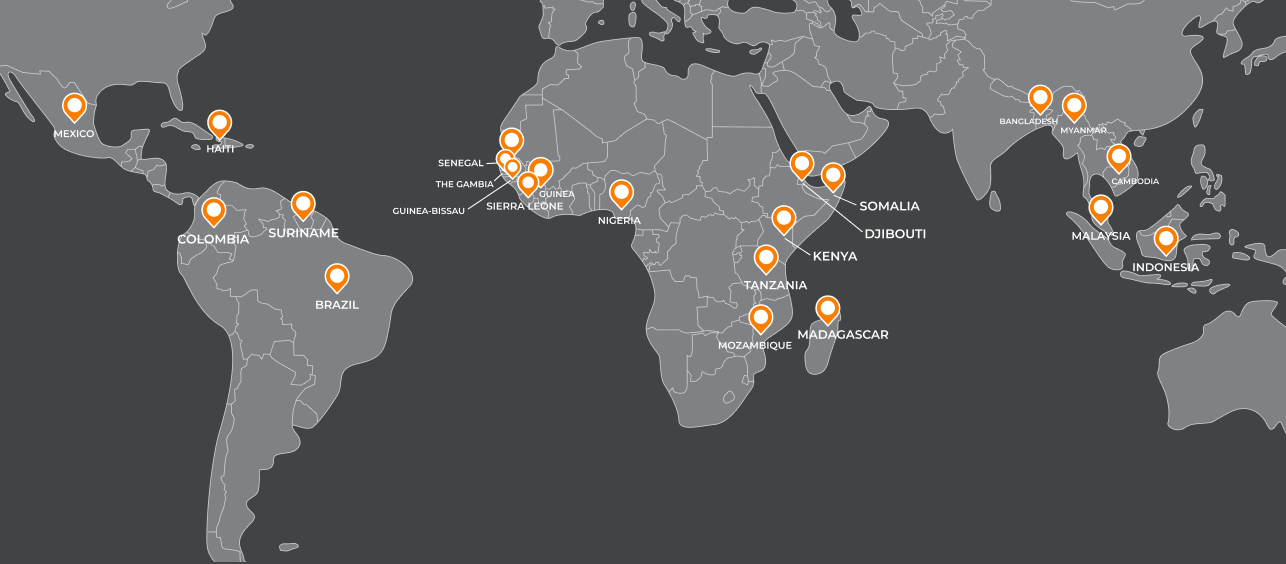
World map highlighting countries in the Americas, Africa, and Asia with orange location markers and labeled names including Mexico, Haiti, Colombia, Suriname, Brazil, several West African countries, Kenya, Tanzania, Mozambique, Madagascar, Somalia, Djibouti, Bangladesh, Myanmar, Cambodia, Malaysia, and Indonesia.

The Facility at a Glance

Icon showing three overlapping green layers stacked diagonally.

50 Projects Worldwide

A global pipeline of nature-based coastal resilience projects, each designed with measurable environmental, social, and economic outcomes.
Simple green outline icon of two hands shaking in a handshake.

Curated Partnerships

Strategic funding partnerships with investors, companies, and foundations to finance projects that deliver tangible Resilience ROI.
Green dollar sign inside a circle icon.

$20 Million by 2027

Mobilising capital to scale nature-based solutions that protect coastlines and livelihoods.
Facility Partners

Why participate

Whether you are securing future credit supply, seeking nature-based returns, or deploying catalytic philanthropic capital — the Initiative offers a structured entry point into blue carbon at early stage.

Corporates

Secure priority access to premium blue carbon credits ahead of market entry.

Investors

Capture risk-adjusted returns from high-growth nature assets uncorrelated with public markets.
Icon showing three overlapping green layers stacked diagonally.

Foundations

Drive biodiversity, coastal resilience and livelihood outcomes through de-risking capital.

A curated pipeline of investment opportunities

The initiative is sourcing, vetting and creating the capital intelligence of a pipeline of opportunities that enables companies, investors and funders to access opportunities.

Currently, the aggregated pipeline available to invest includes:

37

Blue Carbon Projects

$470M

Total Capital Need (USD)

736,000

Hectares

420 Mt

CO2e Sequestration Potential

995,000

People with improved resilience

21

Countries Covered

Featured Projects:

A selection of 10 investment opportunities is presented below. Unlisted projects identified through Earth Security’s direct origination channels are not yet visible to investors or corporates on carbon registries.

Contact us to discuss projects matching with your investment mandates, geographies, or stage preference.

No. Stage Region Size (ha) Type Total Capital Need (USD) Registry Listing
1Pre-feasibilityCentral America5-10kMixed – Conservation Focus$5-10mUnlisted
2Pre-feasibilitySoutheast Asia10-50kConservation$1-5mUnlisted
3FeasibilityEast Africa1-5kRestoration$10-15mUnlisted
4FeasibilitySoutheast Asia10-50kMixed – Conservation FocusOver $20mUnlisted
5PDD DraftingWest Africa10-50kRestoration$15-20mUnlisted
6PDD DraftedSouth Asia1-5kRestoration$1-5mListed
7PDD DraftedWest Africa5-10kRestorationOver $20mUnlisted
8PDD DraftedSoutheast Asia10-50kRestoration$1-5mListed
9PDD Under ValidationCentral Africa10-50kMixed – Conservation Focus$1-5mListed
10PDD Under ValidationSouth Asia1-5kRestoration$1-5mListed

PDD (Project Design Document): The document describing a carbon project’s methodology, monitoring plan, and emissions reduction calculations.

Coastal ecosystems provide over $1 trillion in flood protection benefits yet remain critically underfunded. Investing in nature is investing in resilience.

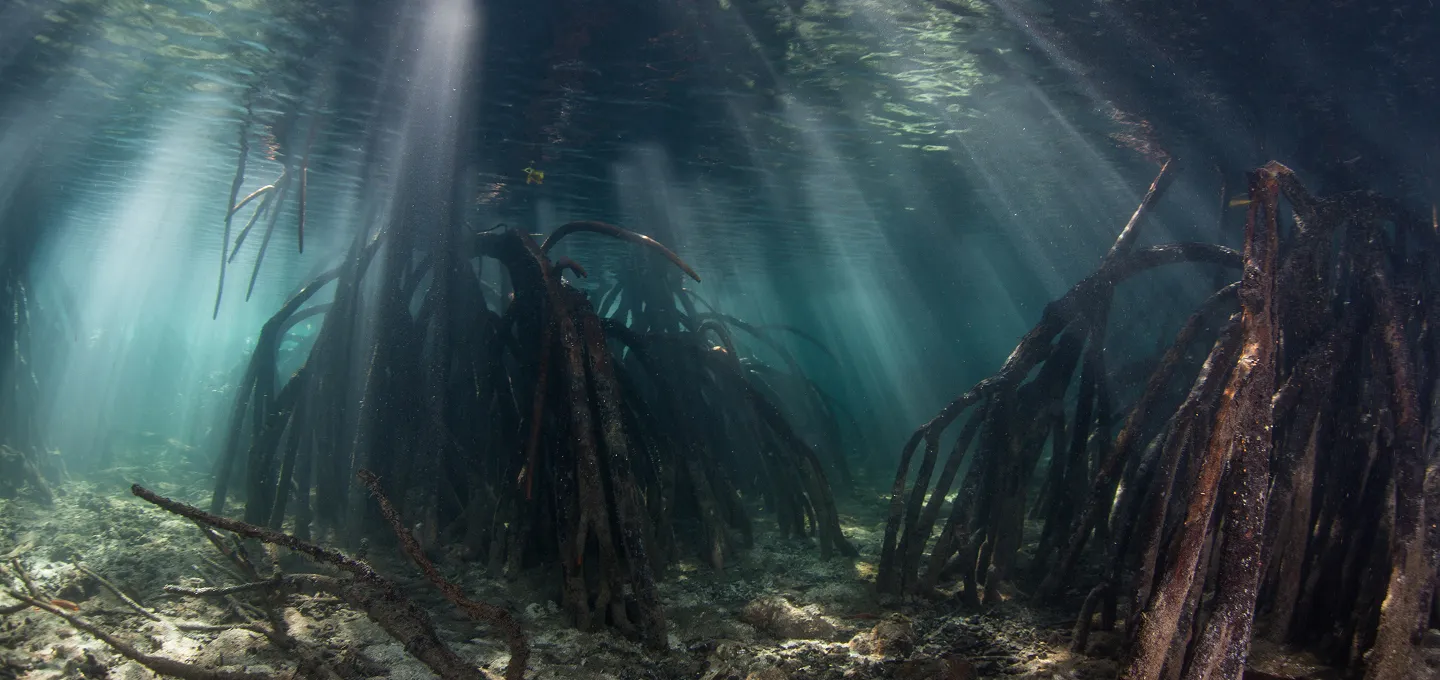
Underwater view of mangrove roots with sunlight filtering through water.

Get in touch

If you're an investor looking for opportunities, or a project looking for funding, get in touch to discuss how we could work together.

Thank you! Your submission has been received!
Oops! Something went wrong while submitting the form.

Other Programs

Catalytic philanthropy models in Indonesia

We launched the M40 Mangrove Program in partnership with UBS Optimus Foundation in 2022. We are building a global pipeline of blue carbon and mangrove-positive investment opportunities, developing investment pilots to bridge the gap between commercial capital and catalytic philanthropy, and creating a blueprint for mangrove investment at scale.

• A portfolio of investment pilots.
• The 'premium' blue carbon framework.
• A global pipeline of investable projects.
• New private sector leadership models.

Calm river with dense green trees along the bank and tall modern buildings in the background under a partly cloudy sky.
Case Study
Investing in mangroves for coastal resilience in North Jakarta

Among the pilot projects of our M40 programme, we're working in one of the remaining mangroves sites in North Jakarta, Taman Wisata Alam Angke Kapuk (TWA AK), to bring funders and investors..

Read more

Nature-based Coastal Insurance in the Philippines

From 2020-2023, we brought together a collective of leading insurance companies in the Philippines, in partnership with the Philippines Insurance and Reinsurance Association (PIRA) and the insurance regulator, to explore, support and catalyse the development of insurance products that price the protection value of coastal ecosystems, in particular mangroves, for the industry’s future growth. This mobilized the sector to initiate the development of three products that re-position the country’s coastal natural wealth as part of the industry’s tools to increase its resilience to coastal natural disasters.

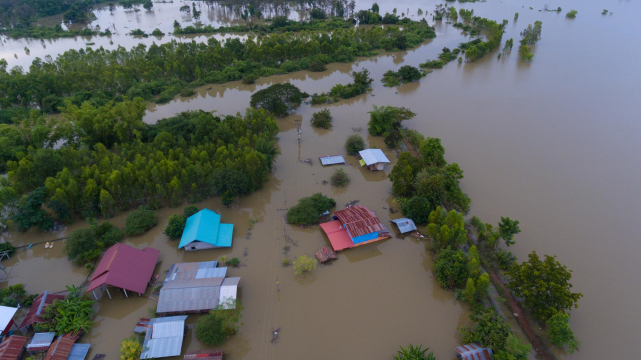
Aerial view of a flooded area with houses partially submerged in brown floodwater surrounded by trees and green vegetation.
Case Study
Pioneering Nature-based Insurance Products in the Philippines

In 2017, we partnered with the Philippine Insurers and Reinsurers Association (PIRA), to explore how NbS could be incorporated into the industry’s climate resilience strategy. We are delighted to share that PIRA is now moving....​

Read more

A Blueprint for a ‘Mangrove Bonds’ in Australia

From 2021-2022, we worked in partnership with HSBC Australia and a collective of local financial institutions and blue economy experts, to explore the opportunities and viable design options for creating a Mangrove Bond in Queensland, Australia. As part of the program we created a local implementation partnership and catalysed collaboration between coastal

infrastructure companies and project developers to take the blueprint into action in selected locations.

FUNDERS

Partners

Together with strategic partners our work is driving a new generation of asset classes with the power to transform how capital markets value and invest in ocean and coastal resilience.

Good Energies logo with a stylized droplet design and the tagline 'Power for a Better World'.Swiss Re logo.GEF logo with a stylized blue and green circular motif and green text: 'gef global environment facility INVESTING IN OUR PLANET'.UBS logo with a black shield featuring three keys crossing each other above the letters UBS in bold black font.HSBC logoLogo with the word 'iki' in lowercase letters next to a stylized flower icon composed of six colorful petals in green, orange, purple, and yellow.

Our work

Investment research

Our research identifies opportunities for natural asset investments linked to infrastructure, focusing on companies and value chains that deliver returns and impact.

Access to catalytic capital

We connect investors and projects across a spectrum of capital, supporting the pathways to scale of innovative models and approaches.

Transition finance platforms

We catalyse finance partnerships among corporates, investors, NGOs and projects, driving collaboration to accelerate the transition to nature-based solutions.

Suppported by
By clicking “Accept”, you agree to the storing of cookies on your device to enhance site navigation, analyze site usage, and assist in our marketing efforts. View our Privacy Policy for more information.