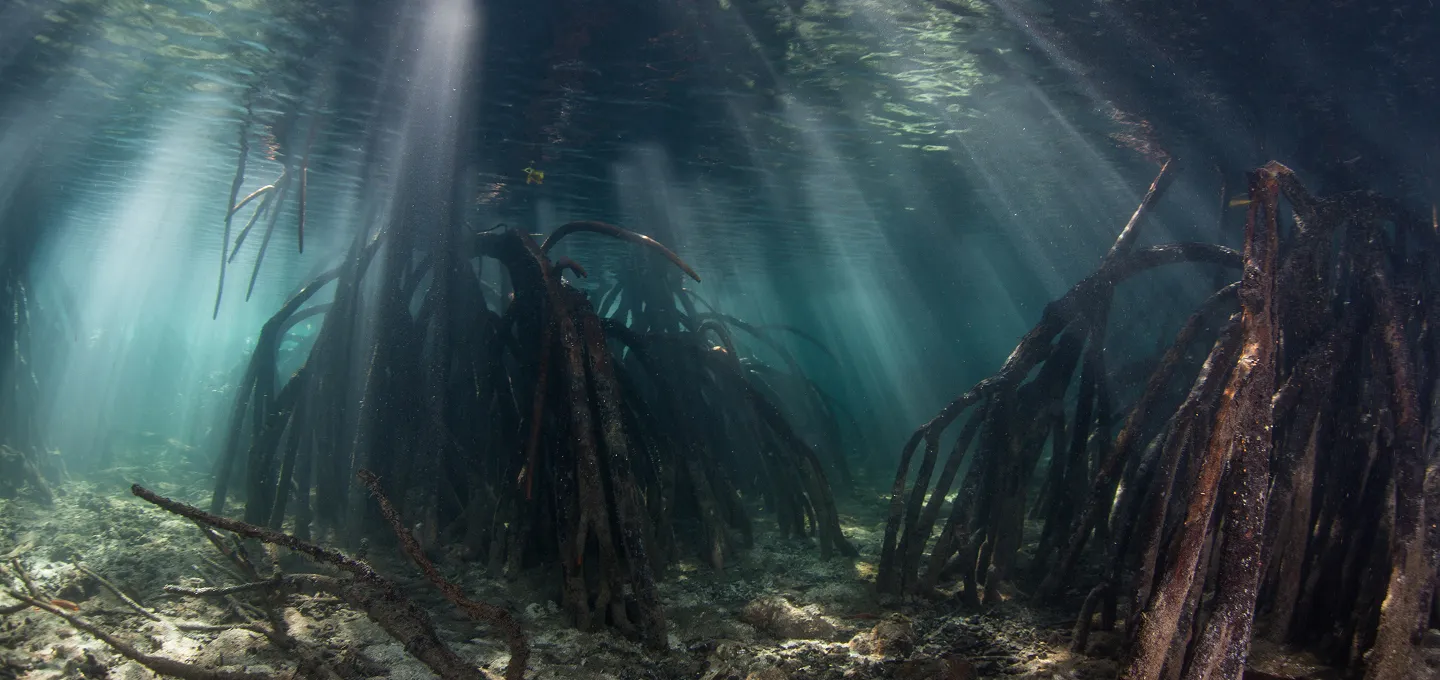
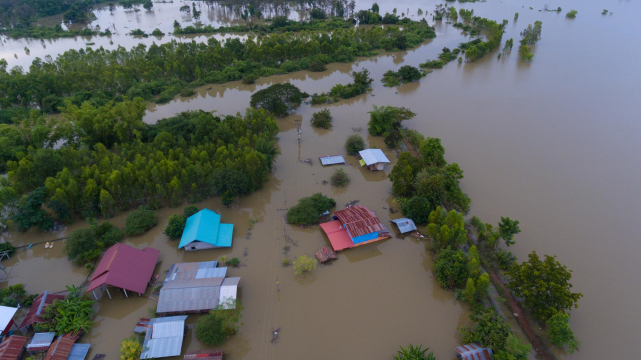
"The presence of coastal habitats reduced the frequency of insured flood losses from lower-severity storms in Florida by around 50%." — Gillian Rutherford, Head of Sustainability Markets, Swiss Re
"There is capital available, but a reluctance to build a pipeline of investable solutions. We want to challenge orthodox thinking around what social entrepreneurship based on nature can achieve." - Manan Bhan, VP and Senior Portfolio Manager, Swiss Re Foundation
About
The Earth Security briefing, in conversation with Swiss Re, convened corporate leaders and finance professionals to examine how companies are generating real returns from coastal NBS.
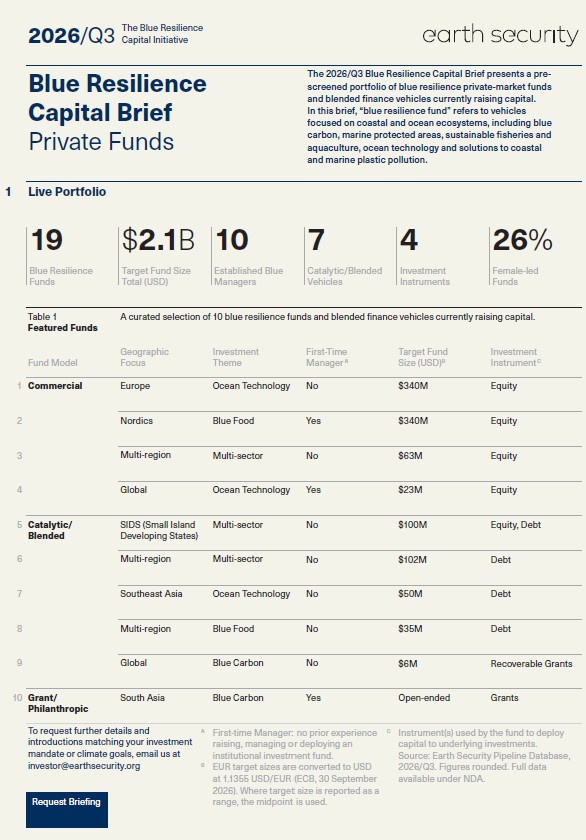
The briefing is part of Earth Security’s blue resilience programme, which is curating a global investment pipeline that provides companies, investors and funders access to coastal NBS and blue carbon projects with Resilience ROI value. Contact us to learn more.
1. Coastal nature-based solutions can deliver five types of ROI, from carbon to coastal protection and sustainable finance.
Earth Security’s latest research featured in the ‘Unlocking Resilience ROI’ report, assessed 150 companies funding mangrove projects and identified five ROI pathways that deliver value to businesses: access to carbon credits, savings from operational resilience, revenues from market access, better terms of corporate finance, and regulatory and social licence to operate. They compound. Yet most companies stay narrowly focused on carbon — leaving the other four largely untapped.
The research also found that blue carbon credits that certify their coastal resilience value can command up to 40% higher carbon prices in the voluntary market. A mangrove project protecting wind turbines in Pakistan delivered a 20× ROI over 20 years in maintenance cost savings, while the Ritz-Carlton Grand Cayman invested $25M in resilience measures, which included NBS, reducing exposure to hurricanes and raising the land value of the property. The economic ROI case is documented and replicable.
2. The asset protection value of coastal NBS is real, but not yet fully appreciated by capital markets.
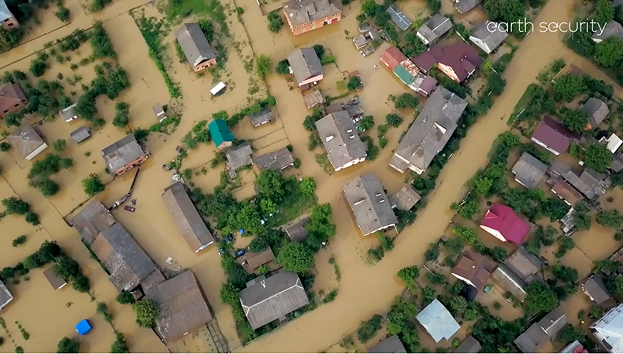
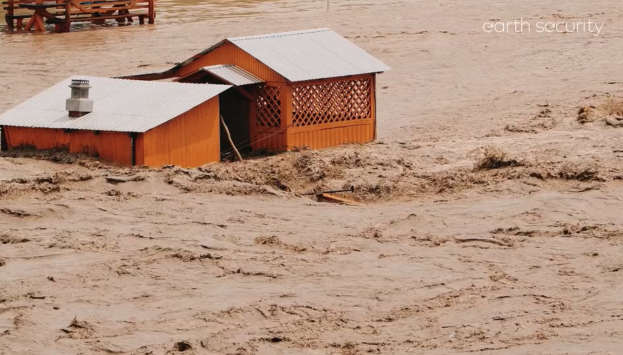
Insured losses from natural catastrophes exceed $100 billion per year globally, growing at an average of 5-7% per year over the last decade. For companies with coastal operations or water-dependent supply chains, the direction of travel is clear: higher premiums, narrower coverage, and in some markets, insurers withdrawing.
Swiss Re's analysis of the resilience value of NBS in Florida (2009–2022) found that areas with high natural habitat coastal protection observed a reduction in loss frequency by 42–65%. Lower-severity storms alone accrued $1.15 billion in insured losses over that period. Coastal nature is loss-prevention infrastructure — and there are growing trends towards pricing that value into risk assessment and premiums.
3. Nature-based solutions are moving from the corporate sustainability budget to the CFO agenda, as their balance sheet value becomes clear.
The evidence shows how companies can lower their debt borrowing costs by supporting nature-based resilience — making NBS a driver of balance sheet value.
Earth Security’s research discusses the case of North Queensland Airports in Australia, which refinanced its corporate debt with a Sustainability-Linked Loan (SLL). The SLL’s interest is tied to the company’s sustainability strategy KPIs, which in this case include coastal mangrove restoration as a resilience value. DP World issued a $100M blue bond linked to its ocean strategy, which includes funding coastal NBS projects.
Reinsurers are increasingly interested in structuring risk transfer mechanisms that make these types of instruments viable — and provide the independent risk data lenders increasingly require. Other financial benefits can also accrue not as cash inflows but a future cost avoided.
4. Corporate foundations can play a catalytic role by de-risking projects, building market coalitions and enabling business innovation.
Corporate foundations are uniquely positioned as catalytic, risk-tolerant capital at the early stageof NBS development — where the risks are highest and commercial investors won't yet venture. The synergies of corporate and philanthropic capital offer multiple possibilities for ROI value. For example, early-stage grant funders for projects can access a Right of First Refusal (ROFR) on future carbon credits which the company can action later to be first in line to purchase credits. The most effective foundations aren't just grant-makers. They see themselves as system enablers: convening coalitions, testing delivery models, and catalysing capital and markets.
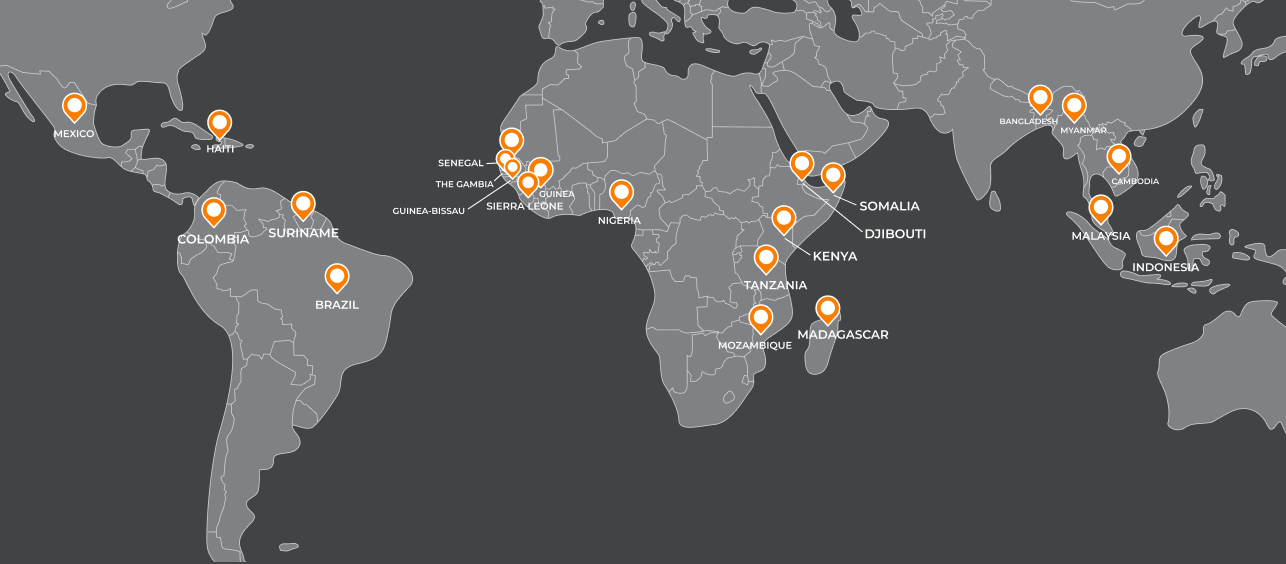
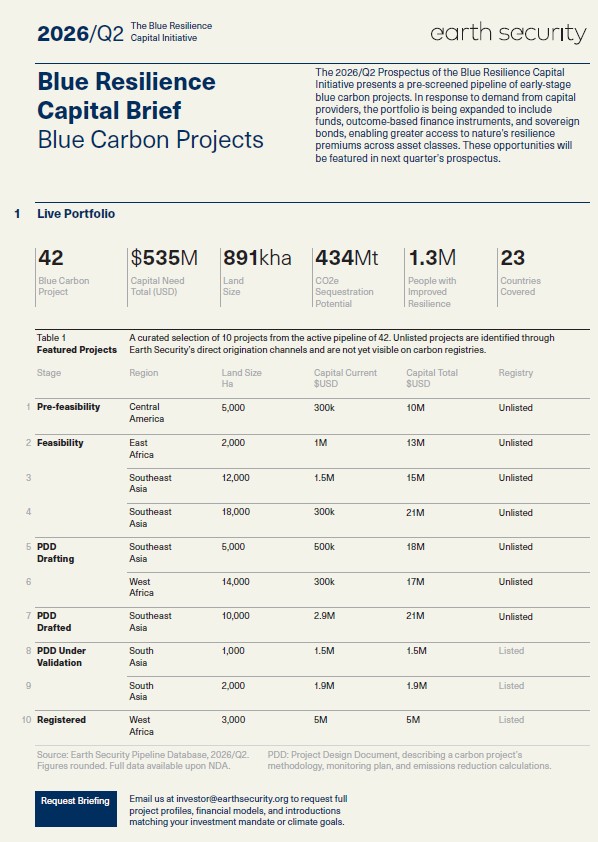
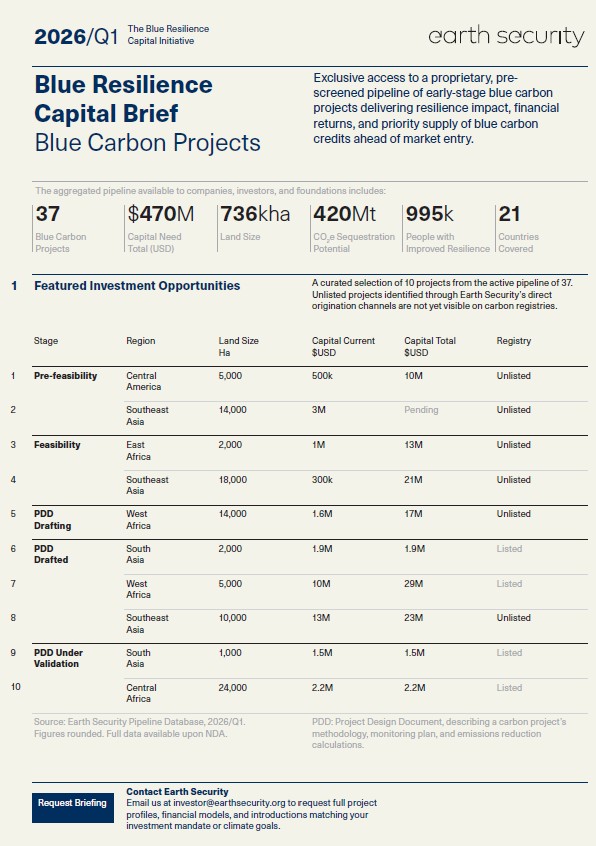
At March 2025, the blue carbon project pipeline that Earth Security is developing with Swiss Re Foundation’s support covers over 35+ vetted projects across 21 countries — with $40M in immediate catalytic capital needs, later translating into over $400M of commercial opportunities. Many are stalled at feasibility stage, with an average range of $500,000-$1M funding tickets needed for projects to pass blue carbon certification. That is exactly where catalytic foundation capital can have a disproportionate impact, and where co-funding coalitions between aligned foundations can unlock systemic leverage.
5. Climate risk and nature risk are inter-connected. Considering the synergies is where companies can create the most strategic value.
Companies positioning to maximise Resilience ROI value have anintegrated view of nature and climate risks. A system view of climate risk exposure, dependency, and opportunity connects to finance, insurance, and investment value.
Three immediate actions companies can take:
- Map your risk exposure — considering climate and nature risks together. Most companies have done part of this for reporting. Very few have integrated ecosystem dependencies into the same view, which reveals the opportunities to create ROI value.
- Engage your insurer as a strategic partner. Insurers have hazard maps and sophisticated forward-looking models — use them to understand your exposure trajectory. Push for NBS to factor into the pricing of your premiums — some insurers are already moving there.
- Create synergies between your foundation and your balance sheet. Catalytic early-stage capital can not only generate local community impact. It can also position the company to benefit from downstream returns in carbon credits, lower premiums, and better financing terms. The ROI loop is real — but it requires both sides of the house in the same conversation.
Continue the conversation
Earth Security is releasing its project pipeline prospectus — 35+ nature-based coastal opportunities, disaggregated by region, stage, and funding type. Get in touch to explore the pipeline or discuss partnership opportunities.

Ripple effects across supply chains
Illuminates how challenges like water scarcity, climate change, and land degradation generate cascading impacts across global supply chains and investment portfolios.

Integrated systems analysis
Connects environmental constraints, demographic trends, and governance dynamics to assess how they interact to influence national and sectoral investment stability—enabling investors to anticipate emerging risks and strategic responses.

Country dashboards & sector insights
Delivers tailored intelligence for high-growth sectors across critical production and consumer markets—pinpointing pressure points that signal both risk exposure and investment opportunity.

Visual storytelling through data
Employs cutting-edge radial graphics inspired by the planetary boundaries framework. Multi-axis indicators make complex systems data intuitive and actionable for decision-makers driving strategic capital allocation.
Explore the reports
The Earth Security Index Reports provided in-depth analysis of critical themes across selected industries and market geographies, enabling investors to anticipate and respond to emerging global dynamics. Download and explore the full Earth Security Index reports: