Category

Earth Security, alongside the Indonesian government, companies, and NGOs, advances a platform to unlock finance for mangroves as a valuable asset.

Earth Security, alongside the Indonesian government, companies, and NGOs, advances a platform to unlock finance for mangroves as a valuable asset.
Written by
Full Name
Published on
September 18, 2024
Hutan Kota, Plataran, Central Jakarta

Friday, 13 September 2024

Earth Security convened some of the leading agencies driving Indonesia's progress on mangrove conservation and restoration, to discuss how blended finance, catalytic investments and private sector leadership can accelerate the pace and scale of impact.

Our workshop, set in the forest setting of Hutan Kota by Plataran in Central Jakarta, was co-convened with the Indonesian Chamber of Commerce and Industry (KADIN), and our growing collaboration with the government's Indonesian Environment Fund (BPDLH), to share insights and expertise across Indonesian government ministries, Indonesian companies, carbon project developers, NGOs, and scientific organisations.

The workshop drew on the network we have built over the past two years, with a series of innovative investment pilots, strategic private sector partnership models, and a focus on catalytic capital for mangroves. Mangroves, recognised as one of the most promising nature-based solutions for carbon sequestration and coastal resilience, have yet to realise their full potential due to a lack of early-stage capital, technical complexities, and coordination across sectors.

The workshop was also the launchpad for our latest report, The Business Case for Mangroves in Indonesia: A Natural Asset for Net-Zero and Coastal Resilience. The report showcases investment opportunities and models for how the private sector can invest in mangroves as a strategic business asset.

Download the report here.

Five key insights emerged from the workshop that pointed to the opportunity to better coordinate the deployment of capital and expertise across sectors:

1. Blended finance: Participants highlighted the opportunity for the next phase of mangrove finance in Indonesia to use public funding as risk capital for projects. This can draw on current models where Indonesian government agencies are already deploying funds as blended finance, including guarantees, de-risking instruments, and insurance.

2. Blue carbon opportunities: The rapid development of Indonesia's carbon market presents significant funding opportunities for blue carbon projects. However, this should re-double efforts to close attention to how projects improve the livelihoods of communities, and that they deploy the best possible scientific (ecological and hydrological) approaches. Both are critical factors to the success (or failure) of carbon projects.

3. Pools of expertise: There is an extensive pool of expertise and knowledge across Indonesian organisations on the role of restoration methodologies, business models, community development, and legal governance–of which need to be tailored region-by-region to local conditions. This pool of expertise, however, is dispersed across sectors. The workshop stressed the need for better coordination among scientific organisations, NGOs, and carbon project developers.

4. Private sector-led catalytic funding: Earth Security’s pilots in Indonesia demonstrate the potential for Indonesian companies to provide early-stage catalytic funding for projects, supporting the future blue carbon market. Projects can deliver maximum business value when operated close to where companies operate.

5. Towards an investment platform: Drawn together by a shared interest in the strategic role that private sector capital can play, the workshop evidenced excitement for the opportunity to work across sectors more efficiently and effectively. These key inputs will continually inform Earth Security’s development of an investment platform that helps accelerate catalytic and blended capital to more rapidly expand a pipeline connecting capital to high-quality, high-impact projects.

We are grateful for the support of partners such as UBS Optimus Foundation, Djarum Foundation and Good Energies Foundation for this catalytic programme and their partnership in realising the potential for investing in mangroves as a nature-based solution for Indonesia and the region.

Contact us

To hear more about partnering with Earth Security, please get in touch with us today.

Ripple effects across supply chains
Illuminates how challenges like water scarcity, climate change, and land degradation generate cascading impacts across global supply chains and investment portfolios. 
Integrated systems analysis 
Connects environmental constraints, demographic trends, and governance dynamics to assess how they interact to influence national and sectoral investment stability—enabling investors to anticipate emerging risks and strategic responses.
Country dashboards & sector insights
Delivers tailored intelligence for high-growth sectors across critical production and consumer markets—pinpointing pressure points that signal both risk exposure and investment opportunity. 
Visual storytelling through data
Employs cutting-edge radial graphics inspired by the planetary boundaries framework. Multi-axis indicators make complex systems data intuitive and actionable for decision-makers driving strategic capital allocation.

Explore the reports 

The Earth Security Index Reports provided in-depth analysis of critical themes across selected industries and market geographies, enabling investors to anticipate and respond to emerging global dynamics. Download and explore the full Earth Security Index reports:

Sign up for periodic updates and insights

The Blue Resilience Capital Initiative

Building a multi-asset class portfolio of nature and resilience investments in the blue economy to support capital re-allocation at scale.
Mangrove trees with exposed roots in shallow seawater under a partly cloudy sky at low tide.

Partner with us

We are engaging and partnering with companies, investors and funders to mobilise investment to projects that deliver nature-based coastal resilience.

From blue carbon investments and natural coastal infrastructure to corporate-philanthropy partnerships that build long-term license to operate, the Facility demonstrates a scalable model for deploying capital for systemic resilience – combining private, public and philanthropic capital – to restore nature, protect coastlines and improve local livelihoods.

Join us to co-develop the next generation of investable coastal resilience projects.

Partner with us
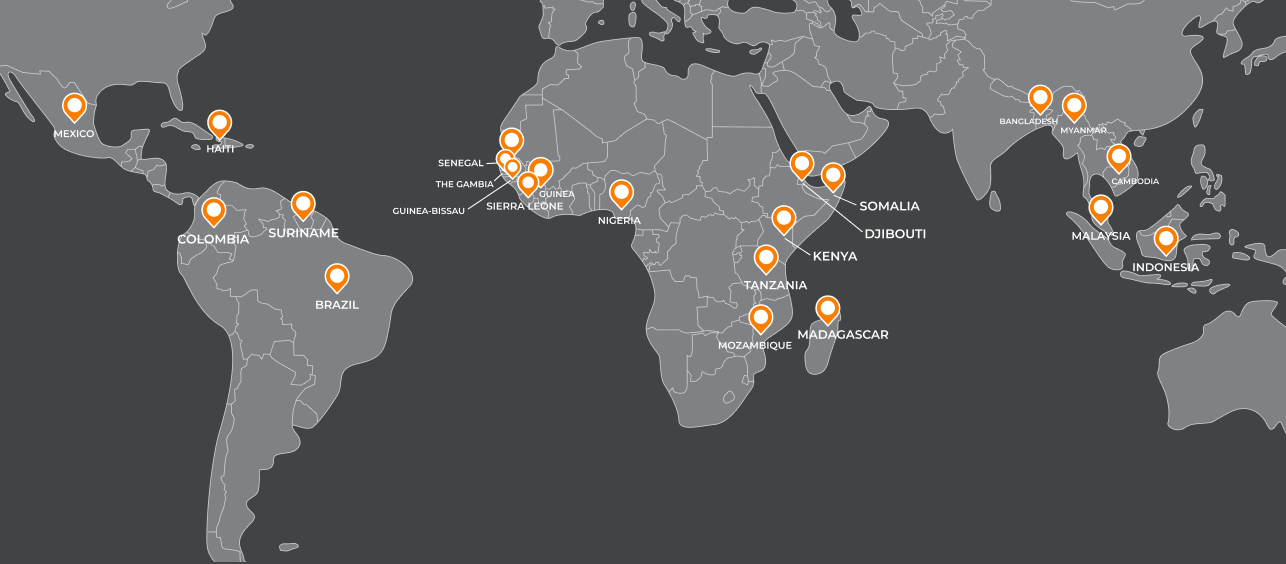
World map highlighting countries in the Americas, Africa, and Asia with orange location markers and labeled names including Mexico, Haiti, Colombia, Suriname, Brazil, several West African countries, Kenya, Tanzania, Mozambique, Madagascar, Somalia, Djibouti, Bangladesh, Myanmar, Cambodia, Malaysia, and Indonesia.

The Facility at a Glance

Icon showing three overlapping green layers stacked diagonally.

50 Projects Worldwide

A global pipeline of nature-based coastal resilience projects, each designed with measurable environmental, social, and economic outcomes.
Simple green outline icon of two hands shaking in a handshake.

Curated Partnerships

Strategic funding partnerships with investors, companies, and foundations to finance projects that deliver tangible Resilience ROI.
Green dollar sign inside a circle icon.

$20 Million by 2027

Mobilising capital to scale nature-based solutions that protect coastlines and livelihoods.
Facility Partners

Investing in Blue Resilience

As climate risk reprices coastal assets, natural capital and resilience investments are positioned to capture the premiums for stability.

From projects rebuilding natural infrastructure and securing a supply of nature credits, to impact investment funds aggregating investments across themes and regions, to fixed income products providing access to corporate and sovereign nature strategies – the integrated portfolio of the Blue Resilience Capital Initiative provides investors an opportunity to participate in this capital movement.

The initiative engages different capital allocators to improve their understanding of the investment case across impact asset classes and identify opportunities.

The initiative engages different capital allocators to improve their understanding of the investment case across impact asset classes and identify opportunities

Institutional Investors

Gain exposure to new asset classes that are built around nature and resilience, offering uncorrelated performance while driving blue economy impact.

Corporates

Secure priority access to nature infrastructure projects and a supply of carbon credits ahead of the market, with models based on local community impact.
Icon showing three overlapping green layers stacked diagonally.

Impact Investors and Foundations

Enable projects that combine economic returns alongside biodiversity, resilience and local livelihoods outcomes through a spectrum of de-risking grants, debt and equity.

A curated investment portfolio

The initiative generates actionable capital intelligence across nature and resilience asset classes, enabling institutional investors, corporates, impact investors, and foundations to identify, evaluate, and access investment opportunities.

Currently, the aggregated pipeline available to invest includes:

42

Nature infrastructure projects
Direct investment in nature conservation and restoration assets, including blue carbon, biodiversity credits, and sustainable coastal infrastructure.

3

Blue & nature investment funds
Private equity, venture capital, and blended finance funds investing in blue economy and blue carbon opportunities.

2

Outcome-based financing
Performance-linked financing structures that align risk investors with outcome payers to deliver measurable environmental and social outcomes.

4

Blue bonds & sustainable debt
Sovereign, municipal, and corporate debt instruments financing coastal resilience, ocean conservation, and sustainable blue economy activities.

Featured Projects:

A selection of 10 investment opportunities is presented below. Unlisted projects identified through Earth Security’s direct origination channels are not yet visible to investors or corporates on carbon registries.

Contact us to discuss projects matching with your investment mandates, geographies, or stage preference.

No. Stage Region Size (ha) Capital Current (USD) Capital Total (USD) Registry Listing
1Pre-feasibilityCentral America5,000$500k$10mUnlisted
2Pre-feasibilitySoutheast Asia14,000$3mPendingUnlisted
3FeasibilityEast Africa2,000$1m$13mUnlisted
4FeasibilitySoutheast Asia18,000$300k$21mUnlisted
5PDD DraftingWest Africa14,000$1.6m$17mUnlisted
6PDD DraftedSouth Asia2,000$1.9m$1.9mListed
7PDD DraftedWest Africa5,000$10m$29mListed
8PDD DraftedSoutheast Asia10,000$13m$23mUnlisted
9PDD Under ValidationSouth Asia1,000$1.5m$1.5mListed
10PDD Under ValidationCentral Africa24,000$2.2m$2.2mListed

PDD (Project Design Document): The document describing a carbon project’s methodology, monitoring plan, and emissions reduction calculations.

Figures rounded. Full data available upon NDA.

Portfolio Prospectus

Download our latest quarterly prospectus, dive deeper into the pipeline of opportunities:

Coastal ecosystems provide over $1 trillion in flood protection benefits yet remain critically underfunded. Investing in nature is investing in resilience.

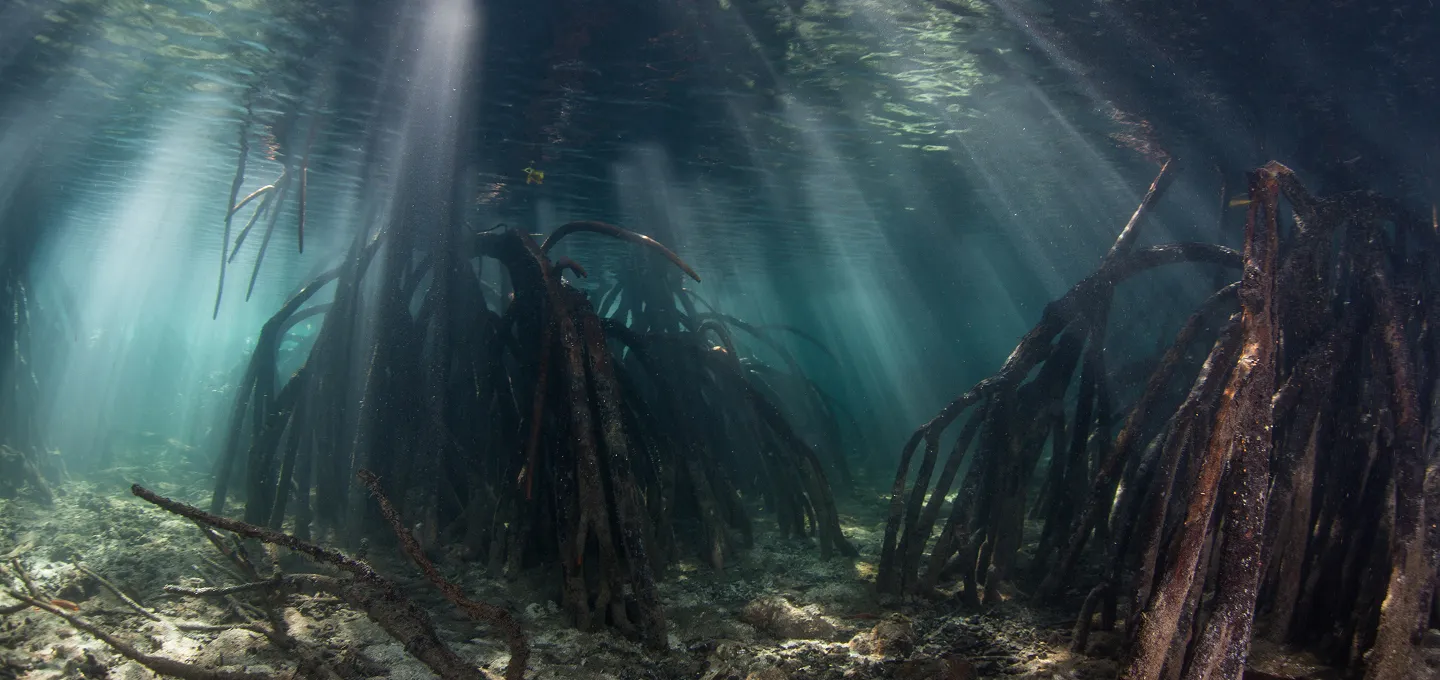
Underwater view of mangrove roots with sunlight filtering through water.

Get in touch

If you're an investor looking for opportunities, or a project looking for funding, get in touch to discuss how we could work together.

Other Programs

Catalytic philanthropy models in Indonesia

We launched the M40 Mangrove Program in partnership with UBS Optimus Foundation in 2022. We are building a global pipeline of blue carbon and mangrove-positive investment opportunities, developing investment pilots to bridge the gap between commercial capital and catalytic philanthropy, and creating a blueprint for mangrove investment at scale.

• A portfolio of investment pilots.
• The 'premium' blue carbon framework.
• A global pipeline of investable projects.
• New private sector leadership models.

Calm river with dense green trees along the bank and tall modern buildings in the background under a partly cloudy sky.
Case Study
Investing in mangroves for coastal resilience in North Jakarta

Among the pilot projects of our M40 programme, we're working in one of the remaining mangroves sites in North Jakarta, Taman Wisata Alam Angke Kapuk (TWA AK), to bring funders and investors..

Read more

Nature-based Coastal Insurance in the Philippines

From 2020-2023, we brought together a collective of leading insurance companies in the Philippines, in partnership with the Philippines Insurance and Reinsurance Association (PIRA) and the insurance regulator, to explore, support and catalyse the development of insurance products that price the protection value of coastal ecosystems, in particular mangroves, for the industry’s future growth. This mobilized the sector to initiate the development of three products that re-position the country’s coastal natural wealth as part of the industry’s tools to increase its resilience to coastal natural disasters.

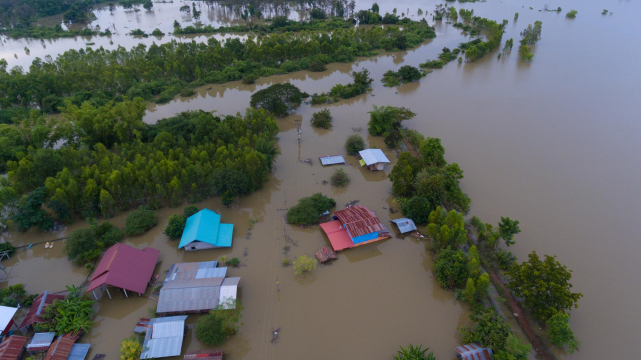
Aerial view of a flooded area with houses partially submerged in brown floodwater surrounded by trees and green vegetation.
Case Study
Pioneering Nature-based Insurance Products in the Philippines

In 2017, we partnered with the Philippine Insurers and Reinsurers Association (PIRA), to explore how NbS could be incorporated into the industry’s climate resilience strategy. We are delighted to share that PIRA is now moving....​

Read more

A Blueprint for a ‘Mangrove Bonds’ in Australia

From 2021-2022, we worked in partnership with HSBC Australia and a collective of local financial institutions and blue economy experts, to explore the opportunities and viable design options for creating a Mangrove Bond in Queensland, Australia. As part of the program we created a local implementation partnership and catalysed collaboration between coastal

infrastructure companies and project developers to take the blueprint into action in selected locations.

FUNDERS

Partners

Together with strategic partners our work is driving a new generation of asset classes with the power to transform how capital markets value and invest in ocean and coastal resilience.

Good Energies logo with a stylized droplet design and the tagline 'Power for a Better World'.Swiss Re logo.GEF logo with a stylized blue and green circular motif and green text: 'gef global environment facility INVESTING IN OUR PLANET'.UBS logo with a black shield featuring three keys crossing each other above the letters UBS in bold black font.HSBC logoLogo with the word 'iki' in lowercase letters next to a stylized flower icon composed of six colorful petals in green, orange, purple, and yellow.

Our work

Investment research

Our research identifies opportunities for natural asset investments linked to infrastructure, focusing on companies and value chains that deliver returns and impact.

Access to catalytic capital

We connect investors and projects across a spectrum of capital, supporting the pathways to scale of innovative models and approaches.

Transition finance platforms

We catalyse finance partnerships among corporates, investors, NGOs and projects, driving collaboration to accelerate the transition to nature-based solutions.

Suppported by